
By Frank Meke
The recent honour bestowed on Otunba Segun Runsewe by the Nigerian Tourism Press—two years after he was forced out of office as Director-General of the National Council for Arts and Culture (NCAC)—has reignited conversation around his controversial removal by the Minister of Art, Culture and the Creative Economy, Hannatu Musa Musawa.
For many industry stakeholders, the recognition did more than celebrate Runsewe’s contributions; it symbolised his return to an industry he served with unmatched passion, creativity and patriotism. The organised tourism media, custodians of the sector’s institutional memory, recognise him as one of the most impactful figures in Nigeria’s cultural tourism landscape in the past three decades.
A Legacy of Exceptional Service
Runsewe has long stood out for his practical, results-driven approach to cultural tourism development. Rather than dwell on long speeches, conferences and empty rhetoric, he insisted on real, measurable action—transforming both the Nigerian Tourism Development Authority (formerly NTDC) and NCAC into vibrant hubs of creativity, cultural diplomacy and national pride.
Under his leadership, staff at both institutions found renewed confidence, motivation and purpose. The agencies flourished, drawing local and international attention and becoming strong symbols of Nigeria’s cultural potential.
But success, as often happens in Nigeria, attracted enemies. Political interference and personal vendettas soon overshadowed merit.
The Fall and Its Aftermath
In 2013, Runsewe was forced out of the NTDC, and the once-thriving institution has struggled ever since, despite numerous attempts at revival. His return to the public space in 2015 to head the NCAC marked a new era. Culture became central to Nigeria’s image-building efforts, and his achievements became talking points for political campaigns.
Yet, the forces determined to truncate progress re-emerged.
January 2024 will remain memorable—not for cultural achievements but for the painful manner in which Runsewe was removed. The announcement came on the very day he gave out his only daughter in marriage, blindsiding industry professionals and deeply wounding family and friends who had gathered to celebrate with him.
Despite appeals for decency, timing and respect, the decision was executed with cold detachment. The pain of that moment remains unforgettable to those who witnessed it.
Two Years Later: A Sector in Decline
Today, NCAC is a shadow of its former self—breathless, underperforming and stripped of the momentum it once enjoyed. In contrast, Runsewe has continued to maintain composure, dignity and unwavering commitment to national development.
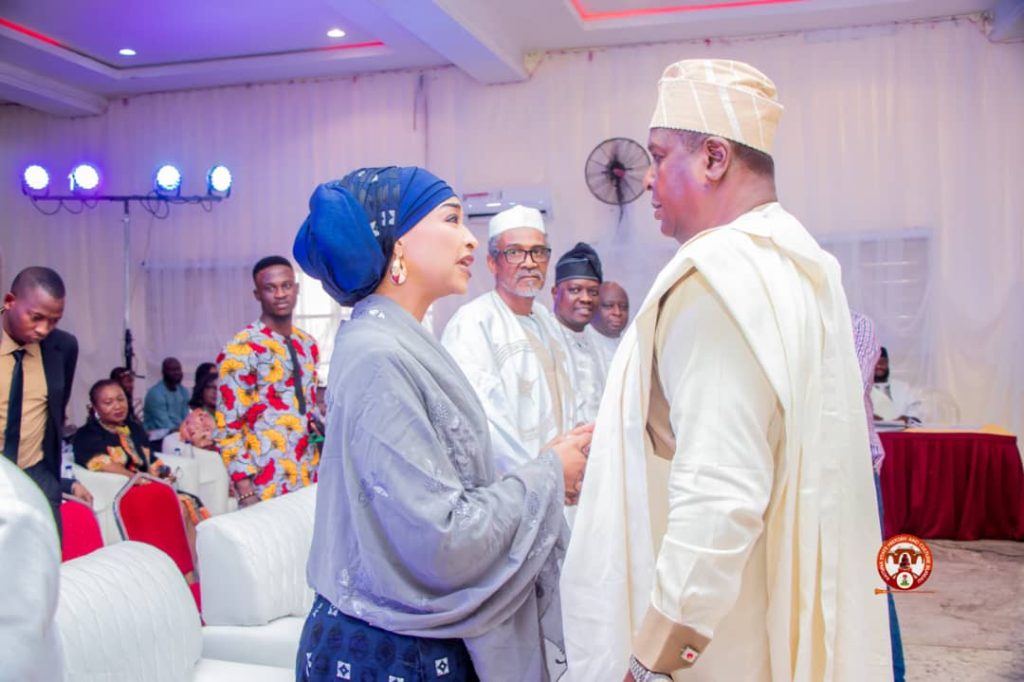
Last week in Abuja, he and Hannatu Musa Musawa met publicly. While Runsewe shared valuable insights on repositioning Nigeria’s cultural tourism industry, the minister’s response was seen by many as evasive—a polite smile masking unresolved injustice.
This encounter should have been a moment of genuine reconciliation and responsibility. Instead, it became another episode of political theatre, prompting applause from some but raising deeper questions among those familiar with the history.
Why an Apology Is Necessary
Hannatu Musa Musawa owes the cultural and tourism sector—and indeed the Nigerian public—an apology. Her decision not only hurt an individual but disrupted the trajectory of an entire industry. The consequences are evident in the decline of NCAC and the stagnation of cultural tourism initiatives nationwide.
An apology is not weakness; it is leadership. It is an acknowledgment that power must be exercised with humility, fairness and respect for both individuals and national institutions.
Accountability Is the First Step to Healing
Those celebrating the recent public “meet and greet” between Musawa and Runsewe may see it as reconciliation. But without an honest admission of wrongdoing, it remains nothing more than optics. True healing can only begin when the wrong is acknowledged.
Nigeria’s cultural and tourism sector has suffered enough from ego, political machinations and personal battles. As history consistently teaches, those who abuse power—whether knowingly or in error—eventually confront the consequences.
For the sake of truth, justice and the future of Nigerian cultural tourism, Hannatu Musa Musawa must confess to the error of that decision and offer a sincere apology to:
- the industry she disrupted,
- the NCAC staff whose hopes were dashed,
- the Nigerian public deprived of visionary leadership, and
- Otunba Segun Runsewe, whose service has always been rooted in love for Nigeria.
Until then, the wounds remain open. And the path to rebuilding the sector will continue to be clouded by the shadows of that unfortunate decision. I weep for our industry and nation!
