
*A Tribute*
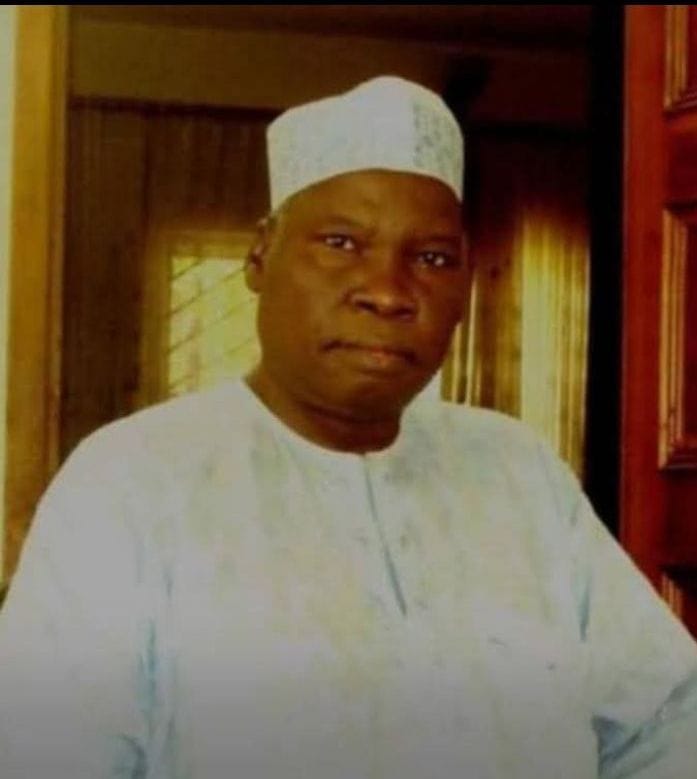
By Frank Meke
He was more than a leader—he was my father and mentor. Lawan Bukar Marguba loved me deeply and intentionally, without pretence. He took pride in me, openly presenting me to friends, family, and colleagues with genuine affection.
Lawan Marguba, widely regarded as the godfather of Nigeria’s conservation history, was a man driven by patriotism and an unwavering love for his country and its rich natural endowments. His legacy at the National Park Service reflects a bold vision—to give Nigeria a respected voice among global conservation leaders.
Humble, strategic, God-fearing, and profoundly nationalistic, Lawan was a gentle giant. He bore no desire to hurt anyone, yet he stood firmly against disorder and indiscipline. His life was transparent—an open book, free of ambiguity. Tall, charismatic, kind, and witty, he was also a tireless workaholic whose foresight brought tomorrow’s vision into today’s reality, particularly in the transformation and protection of Nigeria’s vast forest ecosystems.
His personal interests revealed even more about his character. A voracious reader, he had an insatiable appetite for knowledge and self-improvement. He consistently encouraged his subordinates to break professional and academic barriers. Under his leadership, the National Park Service developed one of the most robust libraries in natural resources and forest ecosystem studies in Nigeria.
Lawan’s passion for nature photography was not merely recreational—it became policy. He deliberately recruited and nurtured skilled photographers within the ecological tourism department. Across all park units, he encouraged the discovery and deployment of talented nature photographers to document Nigeria’s unique flora and fauna. Leading by example, he would embark on nature trails with a camera slung around his neck, later holding debriefing sessions to review and select the most compelling images.
An accomplished and fearless traveler, he frequently visited park units unannounced, maintaining a hands-on leadership style. Internationally, he was a respected figure and resource person in conservation management. His interest in stamp collection reflected his curiosity about history and his appreciation for humanity’s shared story.
Music, too, played a role in his life—it connected him to deeper emotions and reinforced his compassion for others. His “happy hours” were not mere leisure moments but opportunities to bond, uplift, and share love with those around him.
To me, this conservation icon will forever remain alive in memory. I recall his concern for Nigeria’s environmental challenges, especially desertification. As Chairman of the World Bank’s Second Forestry Project, he led efforts to establish extensive tree-planting initiatives, many of which have matured into vital forest ecosystems mitigating environmental disasters across Northern Nigeria.
He was instrumental in elevating ecological tourism, showcasing the immense potential of Kainji Lake and Yankari National Parks to the world. He firmly believed that conservation must deliver tangible benefits to people and the nation; otherwise, it risks becoming a wasted investment.
Lawan Marguba also championed the transformation of rural communities located within or around protected areas. His initiatives attracted international attention, particularly from countries grappling with community resistance to conservation efforts. The National Park Service Support Zone Programme—one of his enduring legacies—empowered local communities and integrated them into national economic development.
He fought relentlessly to reform the park system, successfully transitioning it into a Service structure. Under his leadership, the number of parks expanded, and the institution gained strength and relevance. Notably, one of his mentees, Musa Ibrahim Goni, now serves as the Conservator General of Nigeria.
His reforms extended to legal and operational frameworks, strengthening the park system into a formidable security outfit through the Ranger Corps, effectively combating poaching and illegal exploitation of forest resources, particularly in border regions.
Many distinguished conservationists—both living and late—passed through his mentorship. To mention a few, Alhaji Monsur Ayoade Lamidi Ejide, George okeyoyin, ,,Alhaji Suleiman, late Tanko Abubakar and Alhaji Salami. His influence shaped generations of professionals who continue to uphold his vision.
Born on July 4, 1951, Lawan Bukar Marguba dedicated his life entirely to Nigeria’s conservation efforts. As the founding Chief Executive and Director of the National Park Service from 1991 to 2005, he presided over what is widely regarded as the golden era of conservation in Nigeria.
On a personal note, he guided me through my formative years in journalism, particularly in reporting on conservation and rural development. Unlike many leaders, he remained deeply humble and loyal in his relationships. Whenever he visited Lagos, he chose my modest home as his place of rest, bringing along his entourage. Despite access to the finest hospitality, he preferred the warmth of our home, often praising my wife’s cooking and showing grandfatherly affection to my children.
It took me nearly two months after his passing to write this tribute. The loss was deeply personal—within the National Park Service, many knew him as my father.
I remain grateful for the opportunity he gave me—to grow, to learn, and to belong. Lawan Marguba was the embodiment of a detribalized Nigerian. He mentored people beyond ethnic and social boundaries, raising leaders who would surpass him. Indeed, several Conservators General who served after his retirement were products of his mentorship.
Today, we mourn, yet we also celebrate a life well lived. He ran his race with honor, and even the silent beings of the earth bear witness to his impact.
Goodnight, my dear mentor and father. We will preserve your legacy and keep the National Park Service family united. May Nigeria, someday, rise to fully honor a man who gave everything in service of our conservation dreams.