
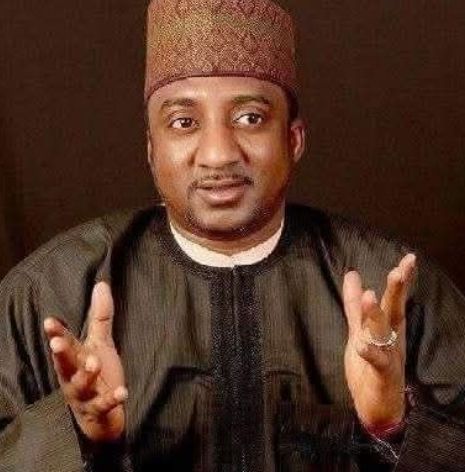
The last may not have been heard about the leadership crisis in the Social Democratic Party (SDP) as a Federal High Court sitting in Abuja has reaffirmed Alhaji Shehu Musa Gabam as the authentic National Chairman of the party, strengthening his claim to the party’s leadership amid ongoing internal disputes.
According to the Certified True Copy (CTC) of the judgment served on the Independent National Electoral Commission (INEC) on Thursday, July 9, 2026, the court held that Gabam remains the recognised National Chairman of the SDP and is legally empowered to act on behalf of the party in matters relating to the submission of candidates for elections.
The judgment arose from a suit instituted by Salawu-Adeniyi Mustapha Olaitan against INEC, the SDP, Gabam and the party’s Acting National Secretary, Uchechukwu Chukwuma, over the nomination of the SDP’s governorship candidate for the 2026 Osun State governorship election.
The case also raised questions about the powers of INEC and the authority of the party’s national leadership to submit candidates for elections.
In its decision, the court reaffirmed that under Sections 29(1) and 29(3) of the Electoral Act, 2022, political parties act through their recognised national officers in submitting the names of candidates to INEC.
The court declared that Gabam, as National Chairman of the SDP, together with the Acting National Secretary, possessed the legal authority to sign, transmit and authenticate the submission of candidates on behalf of the party, adding that such submissions constitute valid compliance with the Electoral Act.
The court further held that once a candidate has emerged from a validly conducted primary election, the responsibility of the party’s national officers is administrative, namely to communicate the decision of the party to INEC, and that such administrative actions cannot override the outcome of a valid primary election.
The judgment also emphasised that the Electoral Act expressly recognized political parties, acting through their recognised national leadership, as the lawful authorities for the submission of candidates and that INEC is under a statutory obligation to act on such submissions.
It held that the electoral commission has no statutory discretion to reject, ignore or refuse to recognise the name of a candidate who emerged from a valid primary election conducted by a political party and whose name was submitted in accordance with the Electoral Act.
The court observed that the law does not permit INEC to question or second-guess the internal authority structure of a political party once a submission has been made through its recognised leadership. It added that any refusal by the commission to accept such a submission on the ground that it was transmitted by the National Chairman and Acting National Secretary would be contrary to the Electoral Act, ultra vires, null and void.
In resolving the issues before it, the court relied on provisions of the Electoral Act, 2022, as well as several decisions of the Supreme Court, including SDP v. INEC (2023), Jegede v. INEC (2021) and other judicial authorities affirming that the nomination and sponsorship of candidates are internal affairs of political parties, while the role of INEC is limited to receiving and publishing candidates validly submitted in accordance with the law.
The judgment is expected to strengthen Gabam’s position in the protracted leadership tussle within the SDP, where rival factions have continued to lay claim to the party’s national leadership.
Political observers believe the ruling could have significant implications for the party’s preparations for future elections, particularly in determining who has the legal authority to communicate official party decisions, submit candidates and interface with INEC on behalf of the Party.
End