
By Onyeka Ezike
For years, golf has often been perceived by commentators and sports enthusiasts as an exclusive sport reserved for the elite. The Vice-Captain of the Golf Section of Ikoyi Club 1938, Obinna Okoli, has challenged that perception, arguing that golf can be accessible to people across different social and economic backgrounds.
Okoli also believes the sport has the potential to become a major driver of sports tourism in Nigeria, generating foreign exchange, creating employment opportunities and providing a platform through which the country can showcase its culture, landscapes and hospitality to the international community.
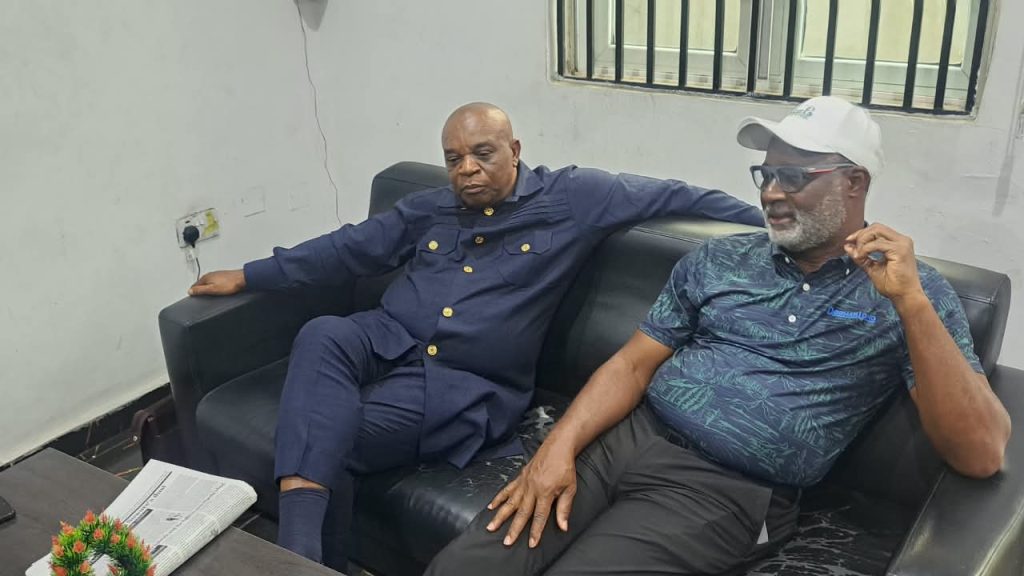
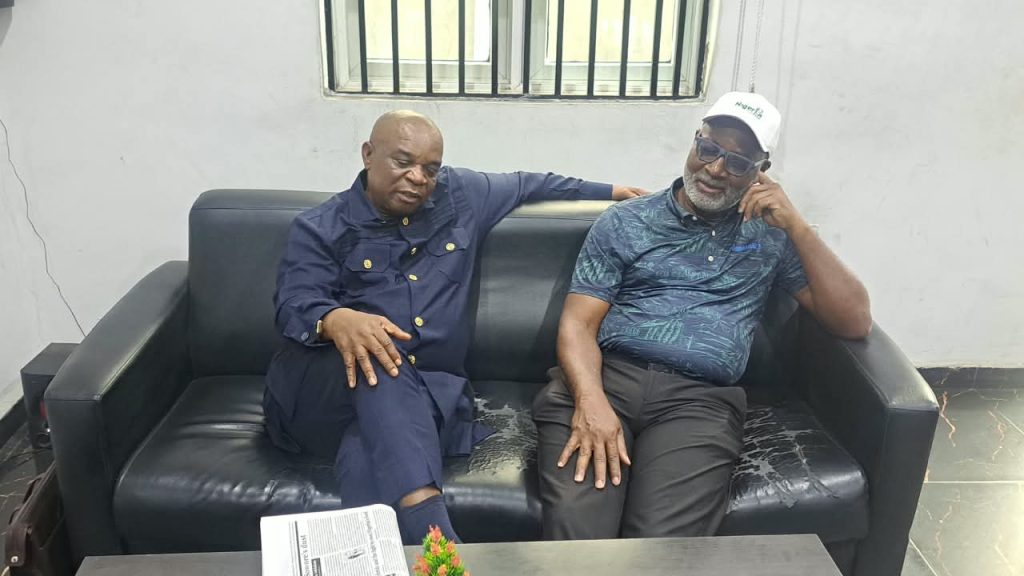
Speaking on Villa Square, a special segment of Cre8tive 9Ja, a weekly tourism and culture magazine programme hosted by veteran tourism journalist Frank Meke and Bunmi Bade-Adeniji on Mainland 98.3 FM, Lagos, Okoli said golf should not be defined solely by its historical association with the wealthy. He said, “Golf is not for the elite. Everything is a product of history, and you have a right to either leave history or continue. You can also decide to say that, at this juncture, I can’t change history, but I can continue. What you do from there is what matters.”
Golf, an outdoor precision sport in which players use different clubs to hit a ball into a series of holes using as few strokes as possible, dates back to 15th-century Scotland, which is widely recognised as the home of the modern game. Unlike many other ball sports, golf does not require a standardised playing field. Instead, courses are designed around varying terrains, making adaptation to the natural environment an important part of the game.
A typical golf course consists of either nine or 18 holes. Each hole features a teeing ground from which play begins and a putting green containing the cup. Between the tee and the green are different sections of terrain, including fairways, roughs and hazards such as water bodies, rocks and sand bunkers. The layout of each course is unique, with many designed to complement their surrounding environment. Golf courses can be found along coastlines, in forests, across rolling hills and even in desert landscapes.
Okoli said Nigeria could leverage its vast landmass and diverse geography to develop golf as a significant component of the country’s sports tourism industry. With a land area of more than 923,000 square kilometres, Nigeria has a variety of landscapes that could support the development of golf courses and destination resorts capable of attracting both domestic and international tourists. He noted that although golf has traditionally been associated with exclusivity, the sport is closely connected to real estate, hospitality, tourism and the development of recreational infrastructure.
According to him, strategic investment in golf could therefore create a broader economic ecosystem involving tourism, accommodation, transportation, hospitality and other supporting industries.
Okoli further explained that the rules governing amateur golf generally prevent amateur players from receiving direct monetary rewards from competitions, although they may receive non-cash prizes such as gift cards, travel vouchers and event tickets. Professional golfers, he noted, are permitted to earn income from the sport.
Beyond its economic and tourism potential, Okoli said golf could also serve as an important tool for youth development, particularly by teaching patience, discipline, resilience and the ability to cope with failure. He explained that the game can be demanding for beginners because it requires considerable patience and determination.
“As a young person, golf will make you look stupid, embarrass you and challenge your patience. It will train you about the challenges of life, keep your mind open to failure and help you navigate through the process of failure and life itself,” he said.
Sharing his personal experience, Okoli revealed that he was introduced to golf by his father at the age of 16 but did not immediately develop an interest in the sport. “I was 16 years old when my father began to take me to the golf club, and I felt like it wasn’t my thing. Then I had finished my secondary school education and was waiting for my university admission,” he said.
He explained that it was not until after completing his university education and reaching the age of 40 that he returned to the golf club and realised how much he had missed by not learning the game earlier. “It was at that point that I wished I had learned it when I was much younger,” he added.
The programme also featured Violet Olaitan Williams, Principal Partner of Vow Ventures Limited (VVL), a maritime consultant and convener of Ehingbeti, an initiative focused on promoting inclusivity for coastal communities within Nigeria’s maritime ecosystem.
Williams explained that the term Ehingbeti is associated with the five-cowrie area around Marina in Lagos, describing how parts of the area were reclaimed and later developed into what are now known as Apapa and Tin Can Island. “If you go towards Outer Marina, all the way down to Five Cowries, you will find Ehingbeti. All those places in Marina were reclaimed and named what you know as Apapa and Tin Can Island,” she said.
According to Williams, the area historically witnessed significant maritime activity, including the movement of shipping vessels and foreign nationals, making it an important entry point into the communities around Ehingbeti. She added that the concept has evolved to encompass communities connected to inland waterways.
Williams said the Ehingbeti Model was introduced in 2024 as a transformational agenda aimed at strengthening Nigeria’s blue economy. The initiative seeks to promote tourism, create employment opportunities and develop an efficient water transportation system that meets international standards. Its focus areas include coastal inclusivity, an effective legal framework and improved security across Nigeria’s waterways.
The Ehingbeti conference is scheduled to hold on Thursday, September 17, 2026, at the Oriental Hotel in Victoria Island, Lagos. Key stakeholders in the maritime, tourism, business and blue economy sectors are expected to participate.
As Nigeria continues to explore new avenues for economic diversification, discussions around golf and the blue economy point to a broader opportunity: harnessing the country’s natural assets, recreational infrastructure and coastal resources to build sustainable tourism industries capable of generating jobs, attracting investment and positioning Nigeria as a competitive destination for sports and cultural tourism.