
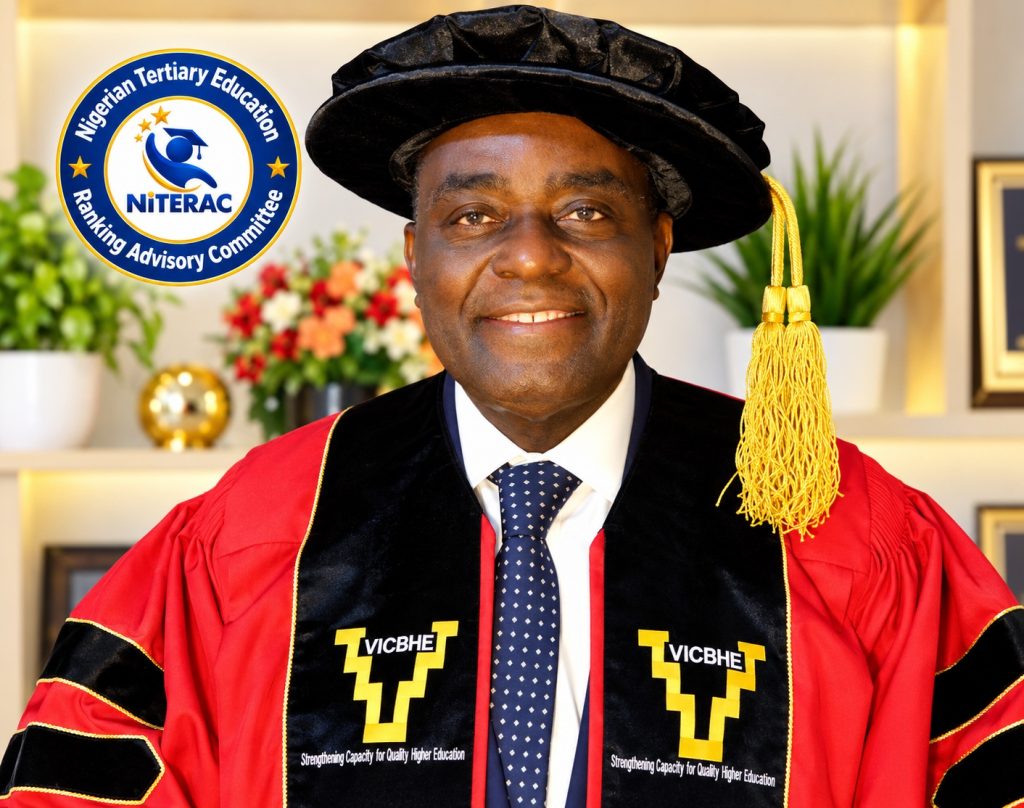
…as 4,203 scholars undergo training in high-impact journal publishing to boost rankings
The 2026 national ranking of Nigerian tertiary institutions is progressing satisfactorily and will culminate in the release of league tables for universities, polytechnics and colleges of education on December 15, the Chairman of the Nigerian Tertiary Education Ranking Advisory Committee (NiTERAC), Professor Emeritus Peter Okebukola, has said.
Prof Okebukola disclosed this in Abuja while announcing that the Virtual Institute for Capacity Building in Higher Education (VICBHE), the training arm of NiTERAC, had trained 4,203 Nigerian scholars in publishing research in high-impact international journals as part of efforts to improve the global competitiveness of the country’s tertiary institutions.
The former Executive Secretary of the National Universities Commission NUC , explained that the national ranking exercise, mandated by the Minister of Education, Dr Maruf Tunji Alausa, was progressing through its approved 17-step process, with the December 15 release date subject to the minister’s approval of NiTERAC’s recommendations.
According to him, the three-day free Masterclass, held from October 15 to 17, 2026, was designed to strengthen the capacity of academics to publish in internationally recognised journals, particularly first-quartile (Q1) journals, thereby improving research quality, citations and the international visibility of Nigerian institutions.
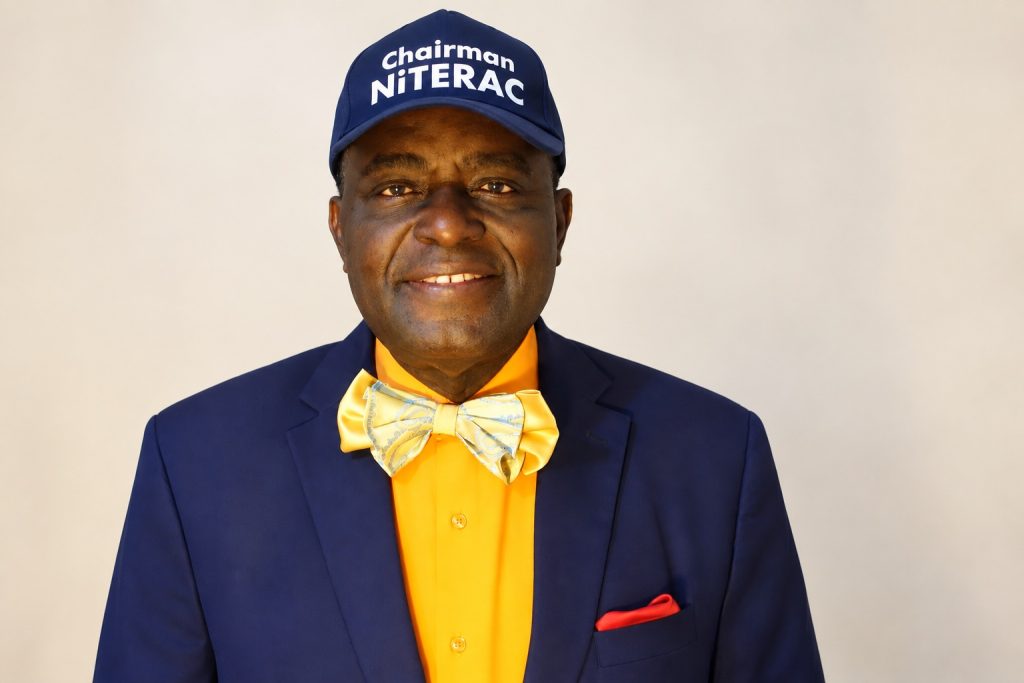
Speaking on the importance of the initiative, Prof Okebukola said the ranking exercise was not merely about positioning institutions on league tables but also about stimulating improvements in teaching, research and international competitiveness.
He said Nigerian universities and other tertiary institutions must produce research that attracts international readership and citations if they were to improve their positions in global rankings.
The Masterclass, themed, “Publishing in High-Impact Journals: What Editors and Reviewers Look For,” featured lectures by Professor Olusola Adesope of Washington State University, United States; Professor Jibril Baba of Ahmadu Bello University, Zaria; and Professor Obinna Onwujekwe of the University of Nigeria, Nsukka.
Participants also undertook practical exercises in which they assumed the roles of journal editors and reviewers, assessed manuscripts, identified weaknesses and practised responding to reviewers’ comments.
They were introduced to the Okebukola 12-C Test for High-Impact Publication, an assessment tool for evaluating manuscripts before submission, as well as techniques for identifying reputable journals and understanding their international rankings.
Prof Okebukola, a former Chairman of the Governing Board of the National Open University of Nigeria,NOUN, further said that the practical approach was intended to expose participants to the expectations of journal editors and reviewers, reduce avoidable manuscript rejection and improve their chances of publishing in high-impact journals.
In the combined test and practical assessment, 23 participants emerged as joint highest scorers, each recording the maximum 3,060 marks.
The scholars were drawn from institutions including the National Open University of Nigeria, Abia State University, Nigerian Defence Academy, Covenant University, Babcock University, Lagos State University, Yaba College of Technology, Rivers State University, University of Benin and Obafemi Awolowo University.
In another development, VICBHE Management has approved the Dr Tunji Alausa Prize for five vice-chancellors who attained the Distinction Plus classification in the training programme.
The recipients are Professor Elisabeta Smaranda Olarinde of Afe Babalola University, who scored 3,040 marks; Professor Oyedunni Sola Arulogun of Chrisland University, 2,945; Professor Gutti Babagana of Kashim Ibrahim University, 2,900; Professor Ibiyinka Agboola Fuwape of Michael and Cecilia Ibru University, 2,570; and Professor Akan Bassey Williams of Ritman University, 2,500.
Commending the vice-chancellors, Okebukola said that their participation demonstrated the importance of continuous learning and leadership by example in strengthening academic standards.
On institutional performance, Yaba College of Technology recorded the highest number of successful participants with 65, followed by Lagos State University with 43 and Obafemi Awolowo University with 41.
Other institutions with notable participation included Nnamdi Azikiwe University (39), National Open University of Nigeria (38), Michael Okpara University of Agriculture (25), Olabisi Onabanjo University (23), University of Ilorin (22), University of Benin (22) and Ladoke Akintola University of Technology (21).
The National Open University of Nigeria and Ladoke Akintola University of Technology also recorded pass rates of 97 per cent and 95 per cent respectively.
Prof Okebukola further announced that VICBHE would organise another free practical Masterclass in mid-November, focusing on “Research Visibility: How to Make Your Scholarship Discoverable, Read and Cited.”
The forthcoming training is expected to feature scholars from the African Academy of Sciences, led by its President, Professor Friday Okonofua, and Dr Chika Ezeugwu of Harvard University, alongside Okebukola.
He said the programme would equip Nigerian academics with practical skills to improve the visibility, readership and citation impact of their research publications.
Prof Okebukola expressed appreciation to the Minister of Education for supporting the national ranking initiative and reaffirmed NiTERAC and VICBHE’s commitment to improving the quality, visibility and international competitiveness of Nigerian tertiary institutions.
END
