By Frank Meke | Cre8tive 9JA
LONDON – In a gathering of global tourism leaders at ExCeL London, a significant moment unfolded for Nigeria’s tourism industry.
It was more than a speech or another product launch. It was an attempt to present Nigeria’s tourism potential to the world in a more organised, accessible and compelling manner.
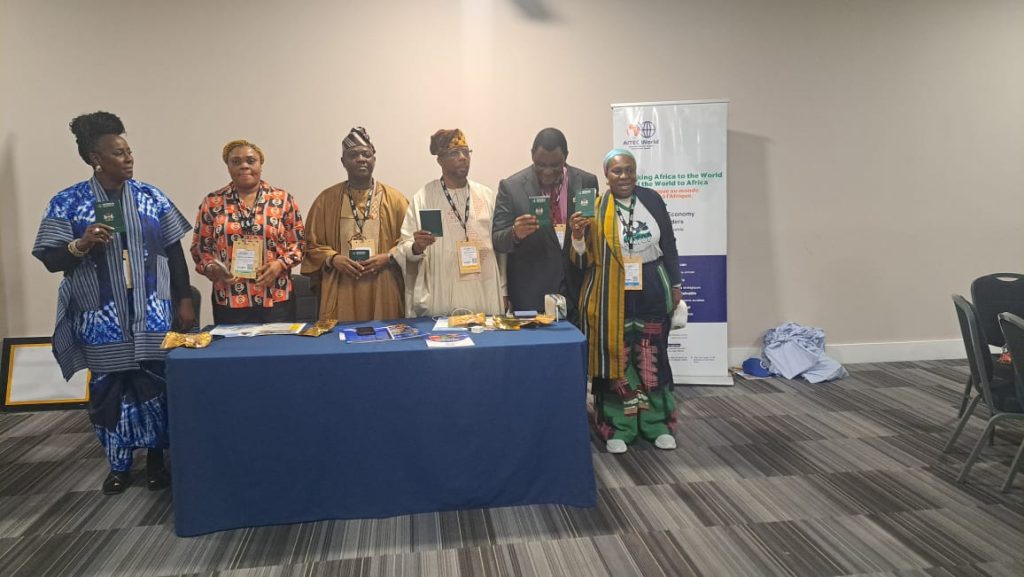
On Wednesday, November 4, 2026, at the 3rd Global Launch of AITEC World during the World Travel Market (WTM) London, the President of the Nigerian Association of Tour Operators (NATOP), Mrs. Bolaji Mustapha, unveiled the Nigeria Tourism Passport, an initiative designed to showcase the country’s diverse tourism attractions and strengthen its positioning in the international tourism market.
With the unveiling, NATOP is taking a practical step towards packaging Nigeria’s tourism offerings for international visitors, tour operators, travel agents and potential investors.
MORE THAN A BOOK – AN INVITATION TO EXPLORE NIGERIA
What exactly is the Nigeria Tourism Passport?
It is not a conventional travel document, nor does it replace the statutory requirements for international travel. Rather, it is a tourism handbook and destination marketing resource designed to introduce the world to Nigeria’s rich cultural, historical and natural attractions.
Featuring Nigeria’s national colours and identity, the Passport offers a curated introduction to the country’s tourism assets, including destinations, cultural festivals, heritage sites, nature-based attractions, adventure experiences, cuisine, music and hospitality.
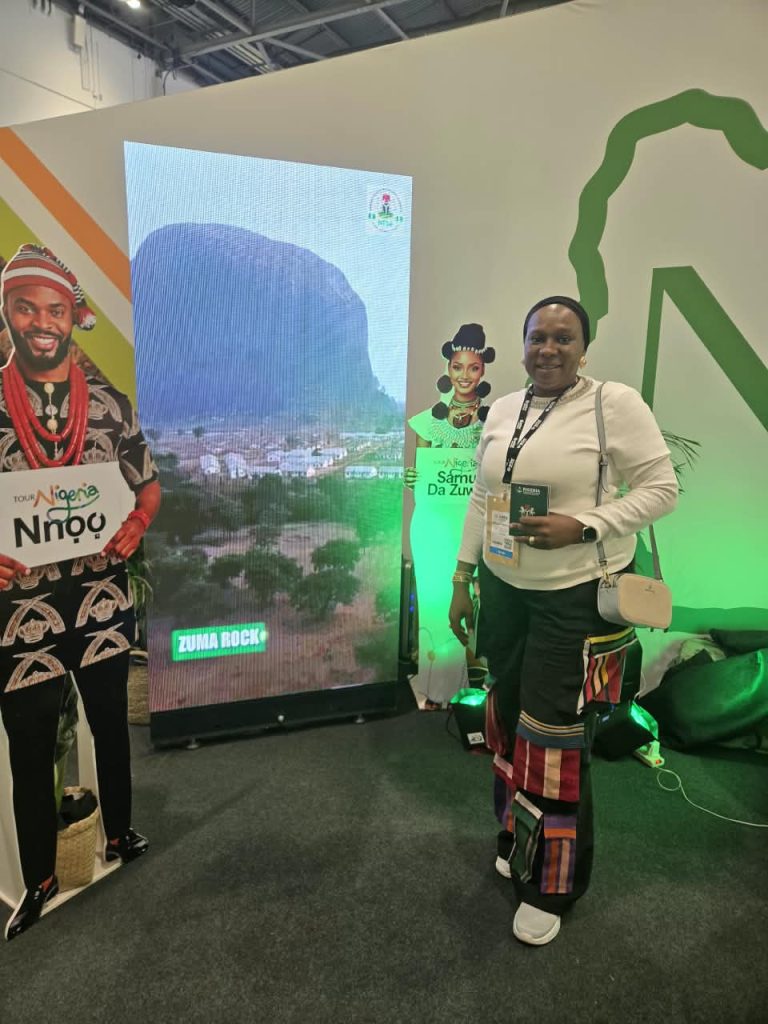
Among the attractions that define Nigeria’s tourism landscape are Obudu Mountain Resort, Ibeno Beach, Yankari Game Reserve and the Osun-Osogbo Sacred Grove. The country’s vibrant cultural calendar, featuring events such as the Argungu Fishing Festival, Calabar Carnival, Osun Festival, Eyo Festival and Durbar, further demonstrates the diversity of experiences available to visitors.
Its heritage offerings, including the historic Benin Kingdom, Oron Museum, Nok Terracotta and Sukur Cultural Landscape, also provide opportunities to attract visitors interested in history, culture and traditional African civilisation.
Beyond showcasing these attractions, the Passport is intended to serve as a practical resource for tour operators, investors and travellers seeking information on exploring Nigeria.
In essence, it seeks to bring Nigeria’s diverse tourism offerings together in one accessible marketing resource.
As Mustapha explained during the unveiling, the initiative is designed to promote Nigeria’s tourism destinations, improve accessibility and create new opportunities for tourism growth and collaboration.
“This is a strategic initiative aimed at promoting Nigeria’s tourism destinations, enhancing accessibility, and creating new opportunities for tourism growth and collaboration,” she said.
WHY LONDON, WHY NOW?
The choice of London for the unveiling was strategic.
The World Travel Market London provides an international meeting point for tourism destinations, travel professionals, investors, airlines, hospitality businesses and other industry stakeholders. It offers participating countries and organisations opportunities to showcase their products, establish partnerships and explore new business opportunities.
For Nigeria, the platform presents an opportunity to communicate its tourism potential directly to an international audience and engage players capable of connecting the country to global tourism markets.
Mustapha captured this aspiration in her message to the international community.
“Nigeria is ready for the world, and the world is welcome to explore Nigeria,” she declared.
For years, Nigeria’s tourism potential has remained a subject of discussion, with stakeholders frequently highlighting the gap between the country’s vast attractions and its ability to convert them into sustained international visitor traffic.
The Nigeria Tourism Passport represents NATOP’s effort to address part of that challenge by giving the country’s tourism offerings a more coordinated marketing identity.
It also places destination storytelling in the hands of industry practitioners who understand the products, experiences and services that make up Nigeria’s tourism market.
Under Mustapha’s leadership, NATOP is seeking to move beyond the conventional role of an industry association towards more practical destination promotion and product development.
A WOMAN LEADING THE CHARGE
The personality behind the unveiling also deserves attention.
As a tour operator and President of NATOP, Mustapha occupies a strategic position in the country’s tourism value chain. Her involvement in the initiative reflects the role private-sector practitioners can play in developing, packaging and marketing Nigeria’s tourism products.
At the London event, she joined other industry leaders, including the Director-General of the Nigerian Tourism Development Authority (NTDA), Mr. Ola Awakan; AITEC World Global Adviser, Mr. Nkereuwem Onung; and AITEC President, Mr. Dine Bouraima.
Her contribution was particularly significant because it went beyond goodwill messages and industry rhetoric. NATOP used the international platform to introduce a tangible destination marketing product.
The initiative also attracted commendation from the NTDA Director-General, who acknowledged its value while emphasising the importance of collaboration and the involvement of the regulatory authority in future efforts.
This recognition points to the need for stronger coordination between government institutions and private-sector operators in promoting Nigeria’s tourism assets.
For NATOP, the Passport offers an opportunity to demonstrate how industry associations can contribute to destination marketing through practical initiatives.
WHAT IT MEANS FOR TOURISM BUSINESS
Beyond its symbolic significance, the Nigeria Tourism Passport has potential commercial value across different segments of the tourism industry.
For international tour operators, it provides a starting point for understanding Nigeria’s attractions and developing travel packages that can be marketed to prospective visitors.
For nigerian tour operators, it offers a destination marketing resource that can support conversations with clients interested in exploring Nigeria.
For investors, it provides an overview of the country’s tourism offerings and opportunities across hospitality, recreation, transportation, destination development and related services.
For Nigerians in the diaspora, it presents an opportunity to reconnect with the country’s cultural heritage, natural attractions and tourism experiences beyond familiar destinations.
For young Nigerians, it offers another platform for promoting national identity, cultural appreciation and the economic possibilities within the tourism sector.
However, the real value of the Passport will ultimately depend on how effectively it is distributed, updated and deployed by tourism stakeholders, as well as the partnerships and business opportunities it generates.
THE MESSAGE BEHIND THE PASSPORT
The unveiling also aligns with the broader message of AITEC World’s global engagement: Come. Connect. Collaborate. Invest.
These four words capture the opportunities the Nigeria Tourism Passport seeks to advance.
COME: It invites international visitors to experience Nigeria’s destinations, culture and hospitality.
CONNECT: It creates an opportunity to link international tourism professionals with Nigerian tour operators and destination managers.
COLLABORATE: It encourages partnerships between local and international stakeholders to develop competitive tourism products and packages.
INVEST: It draws attention to the opportunities available across Nigeria’s tourism and hospitality value chain.
Mustapha reiterated NATOP’s readiness to build on the relationships established through the platform.
“We appreciate AITEC World for providing this platform and look forward to stronger partnerships that will take Nigerian tourism to greater heights,” she said.
Her message reinforces the importance of international cooperation in transforming Nigeria’s tourism potential into measurable economic opportunities.
WHAT NEXT?
While the London unveiling marks an important milestone, the real test lies in implementation.
For the Nigeria Tourism Passport to achieve its objectives, it must reach the people and institutions that can put it to practical use. Its circulation at international tourism exhibitions, through embassies, airlines, hotels, travel agencies and global tourism partners could help extend its reach.
It could also become a useful resource for NATOP’s engagement with government and other stakeholders on the need for improved tourism infrastructure, investment incentives, destination accessibility and supportive policies.
The NTDA Director-General, Ola Awakan, while commending the initiative, emphasised the importance of collaborative input and the involvement of the regulatory authority in future efforts.
His observation highlights an important consideration: destination marketing requires a coordinated approach involving government agencies, private-sector operators, tourism associations and other industry stakeholders.
The success of Nigeria’s tourism promotion efforts will depend not only on how attractively the country presents its destinations but also on the quality of the visitor experience, ease of access, security, infrastructure and the availability of competitive tourism products.
That is why the London unveiling should be seen not merely as the launch of a handbook but as an opportunity to strengthen cooperation around Nigeria’s tourism development.
NIGERIA IS READY FOR THE WORLD
As the global tourism community gathers at WTM London, the unveiling of the Nigeria Tourism Passport offers a fresh opportunity to communicate the country’s tourism story.
It is a statement of intent by NATOP: Nigeria has attractions worth exploring, experiences worth selling and tourism products that deserve greater international attention.
But beyond the photographs, goodwill messages and excitement surrounding the unveiling, the bigger responsibility begins now.
The Passport must move from the exhibition stand into the hands of tour operators, travel agents, investors and travellers. It must translate into destination visits, tourism packages, business partnerships and increased visitor traffic.
Nigeria has taken a step towards presenting its tourism offerings to the world in a more coordinated way.
The next chapter will be determined by how effectively the country turns that presentation into partnerships, investments and experiences.
The invitation has been extended. The world now has another reason to explore Nigeria.
