

By Frank Meke
Thursday, May 14th, 2026, marked a defining moment for Nigeria’s cultural tourism and hospitality economy. It was a day we awoke from slumber to embrace ethical milestones and to advance an idea long trapped in uncertainty and cultural blindness—an opportunity to align with global standards. It was, indeed, a day of record-setting significance, documenting who we are, what we do, and how we practice—on behalf of ourselves, our families, our nation, and our people.
Strategically, the innovative ceremony took place at the Nigeria Merit House in Abuja, an edifice known for hosting national recognitions, inductions, and honours for distinguished Nigerians from all walks of life.
It was a day when determination, grit, vision, and innovation defeated parochialism, divisiveness, and resistance to professional auditing within Nigeria’s tourism and hospitality sector.
Nigeria’s Minister of Arts, Culture, Tourism and Creative Economy led from the front with grace and resolve, brushing aside spirited efforts by entrenched interests seeking to undermine her participation and endorsement.
She was accompanied by the Permanent Secretary, Abdulkarim Ozi Ibrahim—newly appointed, relatively new to the sector, yet bold and resolute in his support for Nigeria’s institutional reform agenda. His presence signalled to the world that Africa’s largest economy is serious about professionalism and global competitiveness in tourism and hospitality.
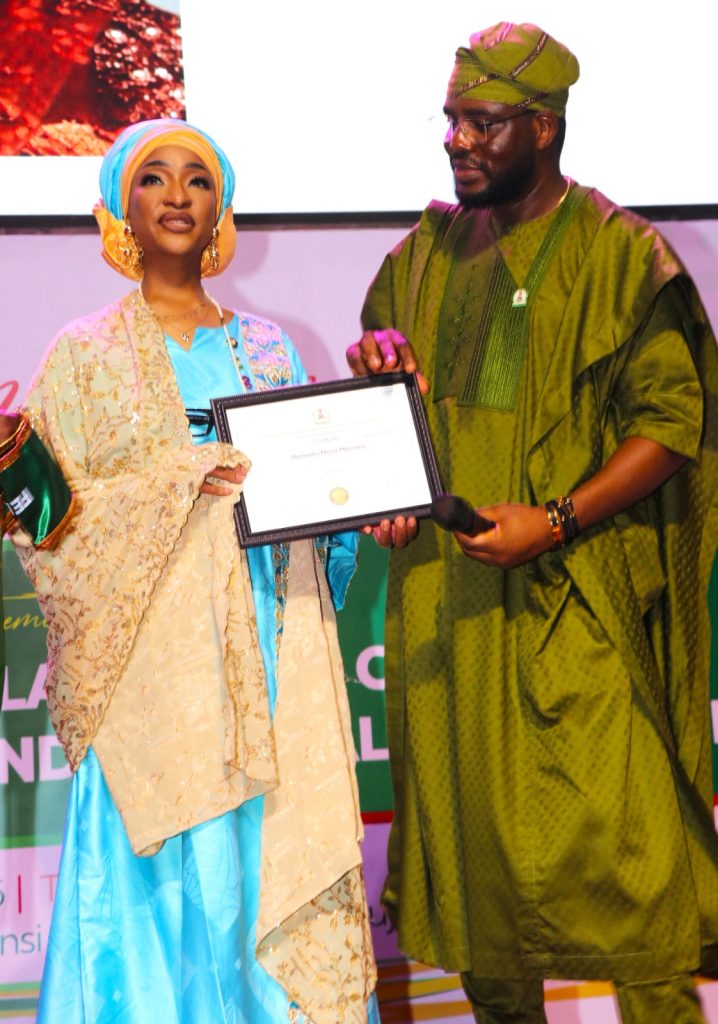
We are not unmindful that it is not yet uhuru for the industry, nor are we fully singing the Zion song. Yet, we are proud that Nigeria, through the National Institute for Hospitality and Tourism, has broken a long-standing jinx that kept the sector trapped in opacity since independence.
By symbolic gesture, the Minister, Hannatu Musa Musawa, became Nigeria’s first registered inductee, taking an oath to abide by the Nigerian Hospitality, Travel and Tourism Code of Ethics and pledging to fulfil all legal and ethical obligations to the nation and its people.
For three years, I had watched Hannatu Musa Musawa stumble and occasionally appear evasive on industry issues. But on this Thursday, she stood tall—poised, composed, and determined to be remembered as the leader who opened a new chapter of accountability and professional profiling in Nigeria’s cultural tourism ecosystem, where stakeholders must be properly identified, certified, and counted.
“Today, I would have preferred the James Bond 007 number, but protocol and my position as a leader in this sector called me to accept this induction as 001, which I am proud to accept,” the Minister declared, her voice resonating across a fully packed hall.
Her expression reflected confidence and fulfillment as she participated actively in the induction process, guided by the provisions of Nigerian law. It offered a renewed lens through which to evaluate a woman previously subjected to intense public scrutiny.
She also reaffirmed her support for the often-misunderstood Director General of the National Institute for Hospitality and Tourism, Abisoye Fagade, commending his dedication and maturity despite past criticisms directed at him.
In her remarks, she appealed to stakeholders, investors, and practitioners to work with government in sanitising the industry, stressing the need to eliminate quacks and unlicensed operators. Over the course of her brief address, she repeatedly used the word “please,” underscoring her conciliatory tone and call for cooperation.
The Permanent Secretary, Abdulkarim Ozi Ibrahim, nodded in agreement throughout the proceedings. From my vantage point behind these leaders, I observed closely, as I often do, watching for signals that could reveal support or dissent toward this reform-driven initiative.
Despite appearing under the weather—with a plaster on her right hand suggesting recent medical attention—the Minister remained steadfast, choosing duty over discomfort in service of the industry’s transformation.
Also in attendance was Nigeria’s foremost legal practitioner and President of the Nigerian Bar Association, Afam Josiah Osigwe (SAN), who emphasized the importance of regulation, certification, and professionalism, noting that without these, Nigeria’s tourism sector risks losing global credibility and attractiveness.
Retired Chief Judge of the Federal Capital Territory, Justice Ishaq Bello, also graced the occasion. As Chairman of the Hospitality, Travel and Tourism Practitioners Disciplinary Tribunal, his presence reinforced the government’s commitment to enforcing ethical standards, licensing compliance, and professional accountability.
Director Generals of NTDA, NICO, and the National Gallery of Arts all reaffirmed the need for a structured and regulated industry where stakeholders are properly identified, certified, and accountable.
It was indeed a momentous occasion, with the Minister personally engaging inductees—embracing women and respectfully acknowledging older male practitioners. Her humility stood out, a trait often considered rare in Nigeria’s political landscape.
Nkereuwem Onung, Chairman of the Industry Sector Skills Council and also a Fellow of the Institute, reiterated the urgency for Nigeria to embrace structured professionalism or risk being overwhelmed by gaps in service delivery and capacity development. The former FTAN chieftain and Special Adviser to Governor Umo Eno of Akwa Ibom State on Culture, spoke on behalf of other inductees, pledging support for the initiative.
President of the National Association of Nigeria Tour Operators (NATOP), Bolaji Mustapha—also a member of the Hospitality and Tourism Disciplinary Tribunal—received a standing ovation for her firm stance against quackery and substandard practices during her vote of thanks, signaling a renewed push for discipline and professionalism in the sector.
The man of the moment, Abisoye Fagade, expressed gratitude to God for the success of the initiative. He reiterated that charity must begin at home, noting that deserving staff within the ministry and its agencies were among the first beneficiaries of certification and licensing.
Indeed, the licensors must first be licensed. It is a focused reform agenda—one that seeks a win-win transformation for all stakeholders, not a parochial emotional tug-of-war driven by confusion or resistance to change.